
To prove you were not at fault in a Florida car accident, collect evidence that shows how the crash happened. Useful proof may include the police report, photos of the scene, vehicle damage, witness statements, traffic or security camera footage, dashcam video, medical records, repair estimates, and communication with the insurance companies. The goal is to show that another driver’s actions caused the crash or that your share of fault is lower than the insurer claims.
In some cases, fault in a car accident is easy to determine. In other situations, it may be more challenging to prove, or the guilty party may resist admitting responsibility. It is essential to know how to prove you are not at fault in a car accident so you can avoid being held financially responsible.
Unfortunately, matters of fault can become significant roadblocks to both the insurance claim and civil litigation process. In some instances, uncertainty about fault can be used by insurance companies to offer smaller settlements. The team at James Horne Law PA can guide you through the process of proving fault and getting the compensation you are entitled to.
What Helps Prove You Were Not at Fault?
After a crash, the insurance company may not accept your side of the story without proof. Use this quick guide to understand what evidence can help protect your claim.
Quick answer
The strongest proof usually shows what happened before, during, and after the crash. Photos, the police report, witness names, video footage, vehicle damage, medical records, and repair estimates can all help show that another driver caused the accident or that your share of fault is lower than claimed.
Police Report
A report can record the crash location, involved drivers, officer notes, citations, witness details, and key facts from the scene.
Photos & Videos
Take photos of vehicle damage, road marks, traffic signs, lane positions, weather, lighting, and anything that shows how the crash happened.
Witnesses
Independent witnesses can support your version of events, especially when the other driver gives a different story.
Camera Footage
Dashcams, traffic cameras, business cameras, doorbell cameras, and parking lot cameras may capture the impact or the moments before it.
Medical Records
Medical records help connect your injuries to the crash and show why the accident caused more than minor inconvenience.
Repair Estimates
Vehicle damage can help explain the direction of impact, crash severity, and whether the other driver’s story makes sense.
What Should You Do Next?
If the other driver blames you
Do not argue at the scene. Focus on collecting proof. Save photos, witness names, insurance details, police information, and any video sources nearby.
If the insurance company says you were partly at fault
Ask what evidence they are using. Fault decisions can be challenged when photos, vehicle damage, witness statements, or crash reports tell a different story.
If there may be video footage
Move quickly. Some businesses, traffic systems, or dashcams may delete footage after a short time. Write down nearby stores, homes, intersections, or parking lots that may have cameras.
If you are asked for a recorded statement
Be careful. A recorded statement can affect your claim. Avoid guessing, accepting blame, or giving details you are unsure about.
Keep These Records
- Police report or crash report number
- Photos of all vehicles and the scene
- Witness names and phone numbers
- Medical visits and treatment records
- Repair estimates and towing records
- Insurance emails, letters, and claim numbers
Avoid These Mistakes
- Do not admit fault at the scene
- Do not guess about speed or distance
- Do not ignore delayed pain
- Do not post crash details online
- Do not accept a low offer too quickly
- Do not wait too long to preserve evidence
Being Blamed for a Crash You Did Not Cause?
James Horne Law can help review the evidence, deal with the insurance company, and protect your Florida car accident claim.
This content is for general information only and is not legal advice. Fault, insurance coverage, and legal options can depend on the facts of the crash.
Who Pays for a Car Accident in Florida?
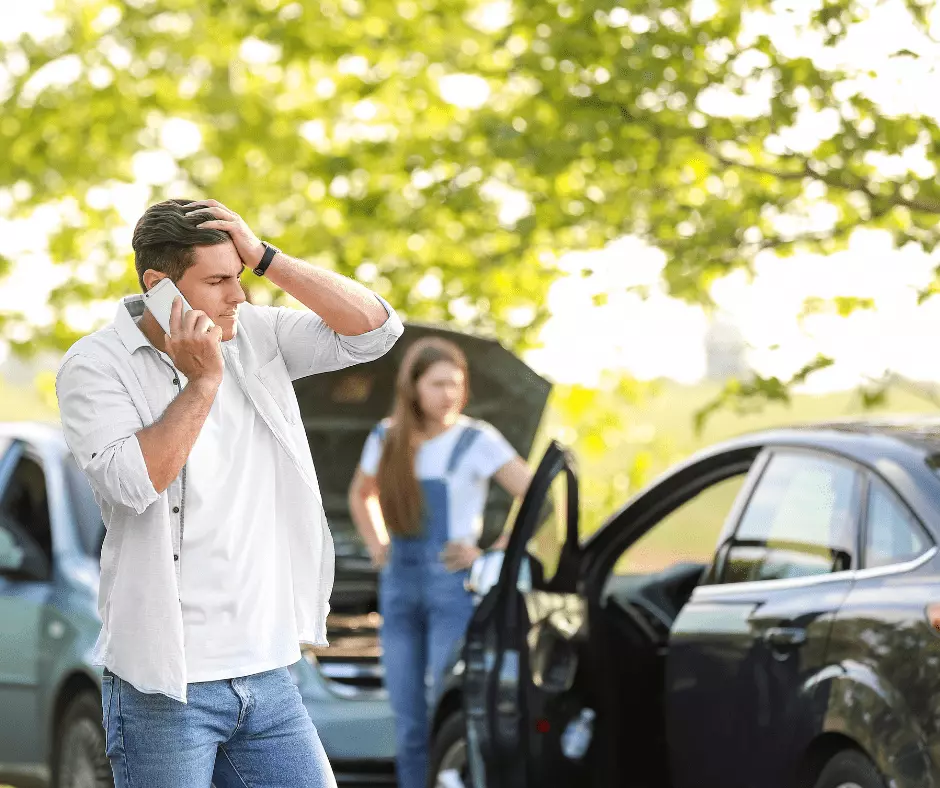
In a minor accident or fender bender, determining fault may not be a big deal. Florida follows a “no-fault” system for vehicle accidents, which means that each driver files a claim with their own insurance company regardless of who caused the accident. However, there are exceptions for serious accidents, and if one applies, you will need to know how to prove you are not at fault in a car accident.
Personal Injury Protection
Florida requires every driver to have personal injury protection, also called “PIP.” This is the minimum required by law. It covers up to $10,000 for injuries, though there are some limitations. PIP will cover up to 80% of necessary medical treatment and 60% of lost income if you are unable to work because of your injury.
Exceptions to No-Fault Insurance
Claims for vehicle damage or loss not covered by PIP could be filed against the at-fault driver. If injuries are deemed serious by Florida standards, you may also be permitted to file a claim against the negligent party. According to state law, a serious injury is a “physical condition that creates a substantial risk of death, serious personal disfigurement, or protracted loss or impairment of the function of a bodily member or organ.”
| Evidence Type | Why It Helps |
|---|---|
| Police report | Records the crash location, parties, officer notes, and possible citations |
| Photos/videos | Shows vehicle position, damage, road conditions, traffic signals, and skid marks |
| Witness statements | Helps confirm what happened before the crash |
| Traffic/security footage | May show the impact or another driver’s unsafe action |
| Medical records | Connects injuries to the crash |
| Repair estimates | Supports property damage and impact severity |
| Insurance communication | Shows how fault is being argued or denied |
How Can I Prove I Am Not At Fault In a Car Accident?
How do you prove you are not at fault in a car accident? Proving that you are not at fault requires evidence. In some cases, that evidence is easy to obtain, but in others, it can be much more difficult. Assuming that the accident has already occurred, our experienced legal team and a Lakewood Ranch car accident attorney are prepared to conduct an independent investigation and gather the evidence needed to determine fault in a car accident. Here is a breakdown of some of the most impactful pieces of evidence.
The Police Report
Any time a vehicle accident occurs, you should contact local law enforcement. The officer will use the report to record important information like location, date, time, witness contact information, and what they believe caused the accident.
Witness Testimony
The police officer may have taken statements or gathered witness contact information. Eyewitness testimony is a great way to determine what occurred. If you have a way to reach witnesses, consider at least emailing them shortly after the accident and asking them to send you a write-up of what they saw. This can also help refresh their memories later.
Traffic Camera Footage
If the accident occurred in or near an intersection, a traffic camera may have recorded it. The same may be true for security cameras in parking lots. It is worth checking to see if the incident was recorded.
Photographs
You do not have to be a professional photographer to take presentable photographs of the accident scene. Any photos you have of the accident could be admissible as evidence and could be especially helpful if they show the angles of the vehicles and the damage.
The Importance of Determining Fault in a Car Accident
In some cases, you may be partially responsible for the accident. That fact does not bar you from legal recovery under Florida’s modified comparative negligence system. You can still file a claim as long as you are not more than 50% responsible for the accident. Your award will be reduced by the percentage you are deemed at fault. For example, if you were awarded $100,000 and found to be 10% at fault, you would receive $90,000. The other party’s legal team or insurance provider will almost always try to make it seem like you are more liable than you really are, which is why it is important to have effective legal representation.
Contact Us
Never accept blame for something you were not responsible for, and never accept a settlement that is less than what you deserve. If you’re unsure about your rights, speaking with an experienced Lakewood Ranch personal injury lawyer can help you understand your legal options and protect your claim. At James Horne Law PA, we are ready to help determine how to prove you are not at fault in a car accident and fight to recover the maximum compensation available. Our firm is a member of the Million Dollar Advocates Forum and has a perfect 10.0 rating on Avvo. Contact us today to get started.
FAQs
Can I still recover money if I was partly at fault in Florida?
Possibly. Florida follows a modified comparative fault rule. Your recovery may be reduced by your percentage of fault, and if you are found more than 50% at fault, you may not recover damages in many negligence cases.
What evidence is most helpful after a Florida car accident?
Photos, police reports, witness statements, traffic camera footage, dashcam video, medical records, vehicle repair estimates, and insurance communications can all help show who caused the crash.
Can a police report prove I was not at fault?
A police report can be helpful, but it is not always the final word. It may include officer observations, citations, witness names, and crash details. Other evidence may still be needed if the insurance company disputes fault.
What if the other driver lies about the accident?
You should avoid arguing at the scene and focus on evidence. Photos, videos, witnesses, physical damage, traffic footage, and repair records can help challenge a false version of events.
Should I talk to the insurance company if they say I was at fault?
Be careful. Insurance adjusters may use your words against you. Before giving a recorded statement or accepting a fault decision, it may help to speak with a Florida car accident lawyer.

James “Jay” Horne is an AV-Preeminent rated aggressive litigation attorney, who focuses his practice on medical malpractice, personal injury and family law matters. He has successfully represented clients from case inception through trial and appeals in state and federal court. Jay was born and raised on the Suncoast. He is married and proud father to a one year old son. In his free time, he enjoys traveling, golfing and distance running during the cool months.